New Bulgarian University (NBU) is a private university in Sofia, Bulgaria, founded in 1991. It offers bachelor’s, master’s and doctoral study options across business, languages, psychology, social sciences, arts, technology and other fields.
For international applicants, NBU is especially relevant because it offers selected English-taught programmes, international mobility opportunities and a campus in Sofia. Admission requirements, tuition fees and selection methods depend on the degree level, programme and applicant status.
New Bulgarian University (NBU) is a private higher education institution in Sofia established on 18 September 1991 by a resolution of the Bulgarian Parliament. The university offers bachelor’s, master’s and doctoral programmes and follows a credit-based academic system that supports flexible study paths and recognition of previous study periods.
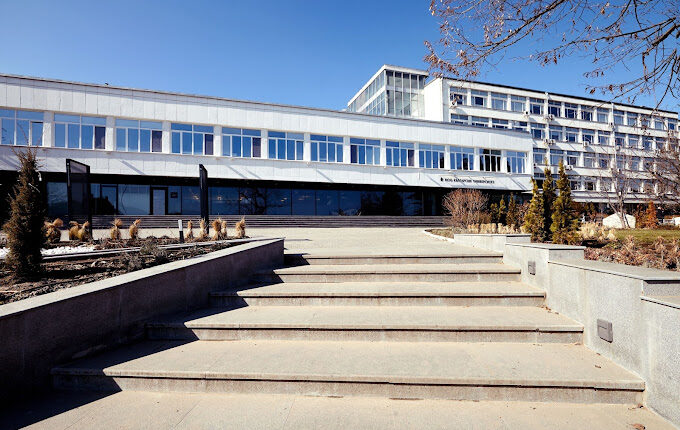
NBU is located at 21 Montevideo Street, Ovcha Kupel, Sofia. Its campus includes teaching buildings, a library, university theatre, museum, UniArt Gallery, medical centre, sports facilities, food outlets and green spaces.

Table Of Contents
New Bulgarian University
About New Bulgarian University
English-taught programmes & courses
New Bulgarian University tuition fees
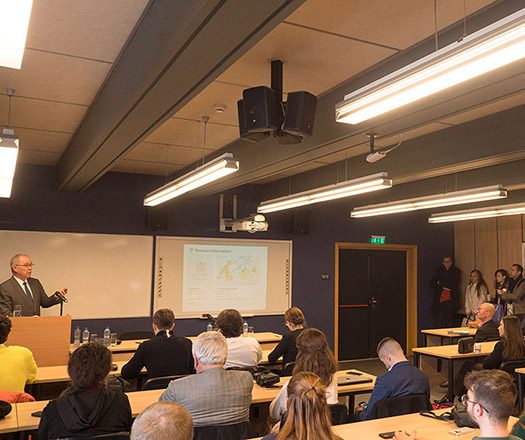
New Bulgarian University (NBU) is a private university in Sofia founded in 1991. Its official profile describes a broad academic model covering the humanities, social sciences, natural sciences, modern technologies and arts. NBU is located at 21 Montevideo Street in the Ovcha Kupel district of Sofia. The campus consists of two main buildings and includes lecture halls, laboratories, the university library, University Theater, NBU Museum, UniArt Gallery, a sports centre, medical centre, cafés, a restaurant and open green spaces. The university also has an international dimension through Erasmus+ mobility, institutional partnerships and programmes taught fully or partly in English.
Location
Sofia, Bulgaria
Courses
Selected English BA & MA
Tuition
€1,550-€2,000/semester
Master's Entry
After Bachelor's degree
Admission
Programme-dependent
Living Cost
€500-€800/month
New Bulgarian University offers programmes across Bachelor’s, Master’s and doctoral levels. The exact English-language portfolio changes by academic year, so applicants should use the current NBU e-catalogue as the final programme list.
Examples of Bachelor’s programmes available in English or with English as a principal language in the 2026/27 catalogue include:
Examples of Master’s programmes in English in the 2026/27 catalogue include:
Standard Bachelor’s programmes at NBU normally last four years. Master’s admission requires a completed Bachelor’s or Professional Bachelor’s degree, with programme-specific entry conditions.
New Bulgarian University combines a campus environment in Sofia with international mobility opportunities. Its Ovcha Kupel campus includes the university library, theatre, museum, gallery, sports facilities, medical centre, cafés, a restaurant and green spaces.
NBU participates in Erasmus+ and supports student mobility through partner institutions. Students also have access to the wider opportunities of living in Sofia, including public transport, cultural events, employment opportunities and travel connections.
New Bulgarian University tuition fees depend on the programme, degree level and applicant status. A single university-wide annual fee is therefore misleading.
| Programme | 2026/27 semester fee |
|---|---|
| Politics and Society – in English | €1,550/semester |
| Applied Foreign Languages for Administration and Management – in English and a second foreign language | €1,550/semester |
| Psychology – in English | €2,000/semester |
| Network Technologies – in English | €2,000/semester |
| English Studies – English and Bulgarian | €1,550/semester |
NBU states that the semester fee for newly admitted 2026/27 students remains unchanged for the normal course of study when there is no interruption.
NBU’s English-language international admissions page currently still displays the 2025/26 non-EU Bachelor range of €5,215.18-€6,749.05 per academic year. Because the English international fee page has not yet been updated to 2026/27, non-EU applicants should confirm the current programme-specific fee with NBU International Relations before making payment.
Master’s tuition also varies by programme and applicant status. Applicants should use the current 2026/27 programme fee schedule or confirm the exact amount with NBU before enrolling.
NBU charges tuition according to the programme and student status. For EU/EEA students, published fees are semester-based. NBU’s international admissions information states that non-EU students pay the tuition fee for one academic year. Payment deadlines follow the university’s academic and financial calendar.
NBU has partnerships with several student-accommodation providers, including UniDorm, Kitchen 59, Aviva Living, Flatimo.bg and Forrent.bg. Students negotiate the specific accommodation terms directly with the provider. Private rental in Sofia is also an option.
As an iGeneration planning estimate, students in Sofia can budget around €500-€800 per month for accommodation, food, transport and personal expenses. Actual spending depends mainly on housing and lifestyle. This is not an official NBU cost estimate.
For international Bachelor applicants, NBU publishes separate 2026 application windows for EU/EEA and non-EU applicants:
| Applicant group | Application period |
|---|---|
| EU/EEA applicants | 20 April – 11 September 2026 |
| Non-EU applicants | 20 April – 31 July 2026 |
NBU advises non-EU applicants to apply early because the visa and approval process can take several months. Master’s programmes use their own admission schedules, so applicants should check the current programme-specific interview and application calendar.
New Bulgarian University admission requirements depend on the degree level, programme and applicant status. There is no single entrance-exam rule for every NBU programme.
NBU’s official international admission process requires applicants to prepare the relevant educational and identification documents. For applicants educated outside Bulgaria, this can include recognition of completed secondary education through NACID.
The relevant school subjects used for admission must meet NBU’s minimum threshold of 62% of the maximum possible grade in the applicant’s national grading system.
Applicants to English-taught Bachelor programmes whose native language is not English normally need a recognised English-language certificate. If they do not have one, NBU provides a computer-based online English test; the published minimum score is 85/100. NBU lists exemptions for applicants from, or educated in, specified English-speaking countries.
Some programmes use additional selection methods such as an English-language examination, specialised examination, essay, audition or other programme-specific assessment. Applicants should therefore check the current admission requirements for the exact programme rather than assuming that all NBU courses use the same test.
Master’s programmes are open to applicants who have completed a Bachelor’s or Professional Bachelor’s degree. International applicants must complete the required degree-recognition process and normally arrange an admissions interview. English-taught Master’s programmes require proof of English proficiency.
For support with documents and the application process, contact the iGeneration admissions team.
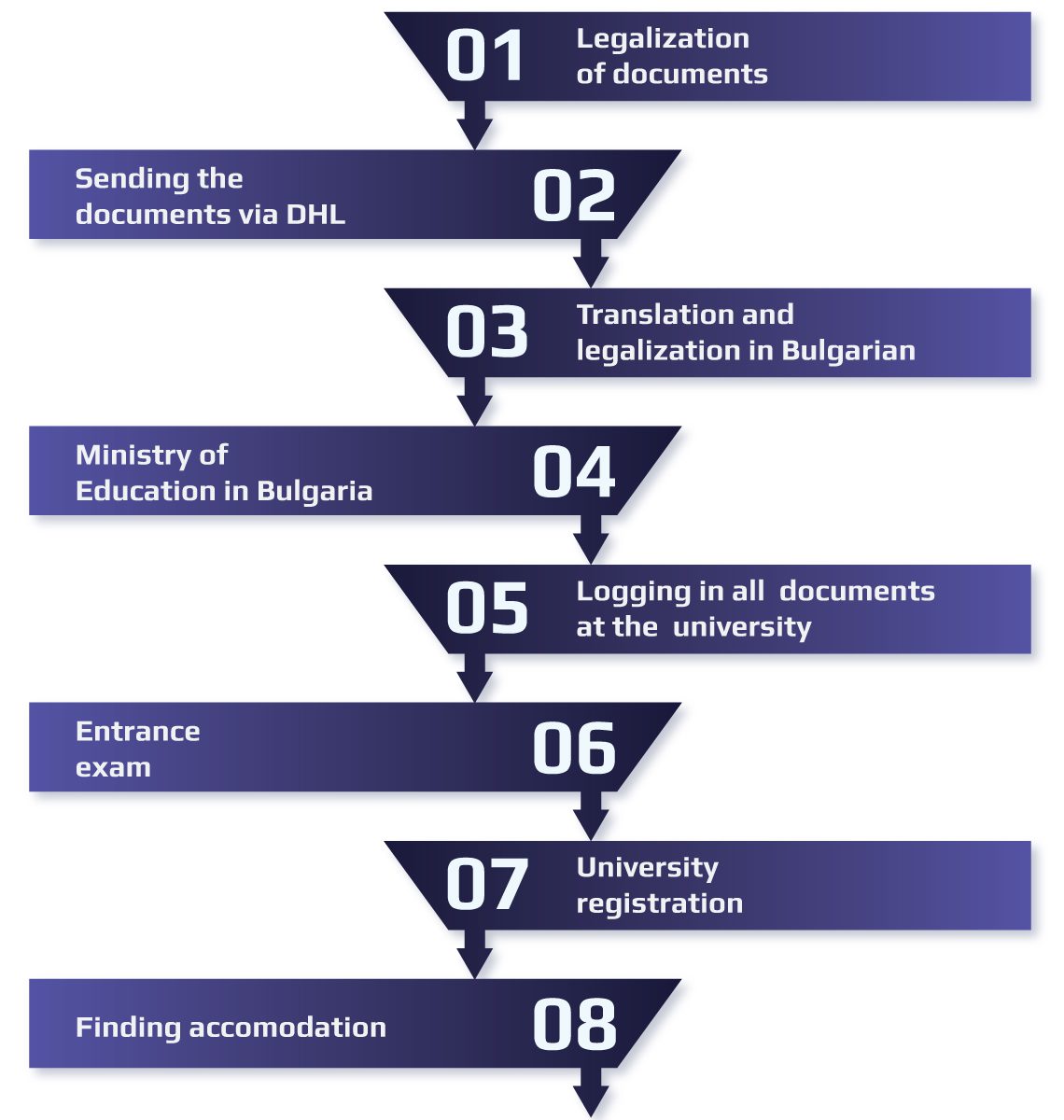
Applying to New Bulgarian University can involve document preparation, translations, legalisation, recognition of previous education, programme-specific admission requirements and, for non-EU applicants, visa-related steps.
iGeneration helps international applicants organise the required documents, follow the correct timeline and confirm the admission route for the chosen NBU programme before submission.
NBU does not use one identical entrance procedure for every programme. Depending on your chosen degree, you may need an English-language test, specialised examination, essay, interview or another programme-specific assessment. Some NBU tests are available online.
Contact us to confirm the correct 2026/27 admission route for your programme.
Requirements depend on the programme. International Bachelor applicants generally need a completed secondary education diploma and supplement, the relevant recognition documents for education completed abroad, identification documents and language evidence for English-taught programmes. NBU also requires the relevant school subjects used for admission to meet its 62% minimum threshold.
There is no single answer for every programme. NBU uses programme-specific admission methods. Depending on the course, applicants may face an English-language test, specialised examination, essay, audition or another assessment.
EU/EEA Bachelor applicants: 20 April – 11 September 2026.
Non-EU Bachelor applicants: 20 April – 31 July 2026.
Master’s programmes follow programme-specific admission and interview schedules.
For English-taught Bachelor programmes, applicants whose native language is not English normally need a recognised English-language certificate. Applicants without one can use NBU’s computer-based online English test, with a published minimum score of 85/100. NBU lists exemptions for applicants from, or educated in, specified English-speaking countries.
Documents issued abroad may require legalisation, certified translation and formal recognition according to the applicant’s route.
NBU is an accredited Bulgarian higher education institution. Recognition of a specific degree outside Bulgaria depends on the destination country, employer, profession and any local licensing or recognition rules. Applicants should verify the requirements of the authority that applies to their intended country and profession.
No. NBU is a multilingual university. Selected programmes are taught fully in English, while others are taught in Bulgarian or combine languages. The teaching language must be checked for the specific 2026/27 programme in the official NBU catalogue.
Yes, transfer and recognition of previous study can be possible. NBU’s international information specifically notes that its credit system allows accreditation of study periods completed at other universities, and the university has procedures for transfer students and credit recognition.
The number of recognised credits and the study year you can enter depend on your previous university, completed courses, academic results and the requirements of the destination programme. The final decision belongs to NBU.
New Bulgarian University was established as a private university by a resolution of the Bulgarian Parliament on 18 September 1991. NBU’s official profile reports institutional accreditation by Bulgaria’s National Evaluation and Accreditation Agency, including maximum-term accreditations in 2001, 2006, 2012 and 2019.
For regulated professions or further study abroad, applicants should separately verify the recognition requirements that apply in the destination country.

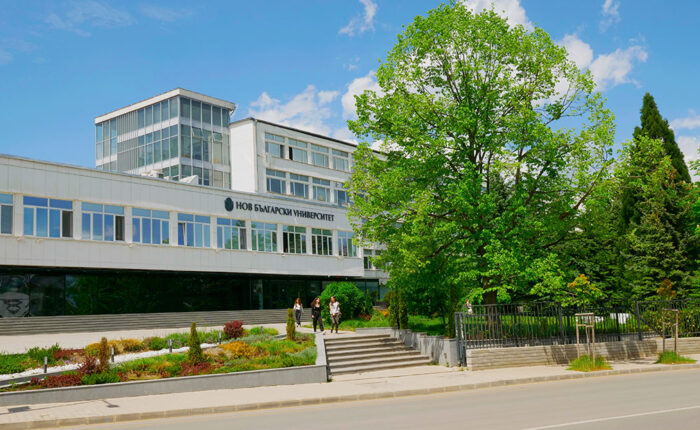
New Bulgarian University provides students with access to accommodation options through partnerships with several housing organisations. NBU currently lists partners including UniDorm, Kitchen 59, Aviva Living, Flatimo.bg and Forrent.bg. Students negotiate the specific accommodation terms directly with the provider.
Students can also rent privately in Sofia. The NBU campus is in Ovcha Kupel, so accommodation can be chosen near the university or in another part of the city with suitable transport connections.
As a planning estimate, private and shared rental prices vary significantly by location, apartment type and whether the accommodation is shared. Students should confirm the current rent directly with the landlord or accommodation provider before signing a contract.
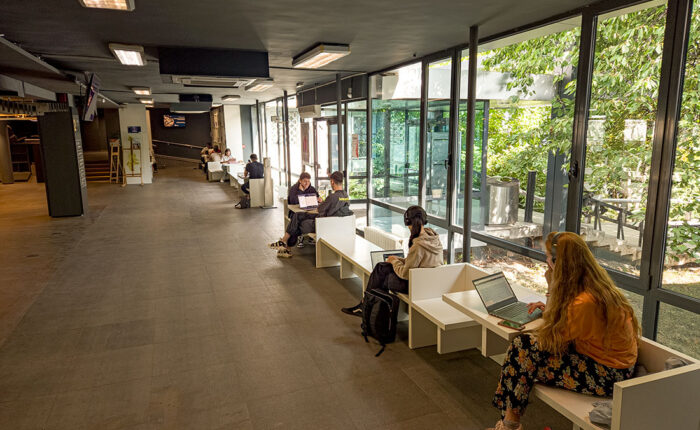
New Bulgarian University has an active campus environment with academic, cultural and extracurricular facilities. The campus includes the NBU Library, University Theater, NBU Museum, UniArt Gallery, Sports Center, Medical Center, cafés, a restaurant and green spaces.
NBU also participates in Erasmus+ mobility and works with international partner institutions, giving eligible students opportunities to study or train abroad.
Sofia offers a large student population, public transport, cultural events, nightlife, parks and access to Vitosha Mountain. NBU is located in Ovcha Kupel in south-west Sofia and is connected to the rest of the city by public transport.
As an iGeneration planning estimate, students can budget around €500-€800 per month for accommodation, food, local transport and personal expenses. Actual costs depend mainly on accommodation and lifestyle. This is not an official NBU estimate.
New Bulgarian University (NBU) is located in Sofia, offering convenient access to students from all parts of the city. Here’s how you can reach the university and other useful information:
Public Transport:
Taxi Services:
For a faster and more convenient ride, you can use a taxi. It is recommended to book a taxi by phone or app to avoid pricing issues. Some reliable taxi companies in Sofia include:
Always ensure the taxi driver uses a taximeter to avoid overcharging.
Other Useful Information:
For more details about faculties, study programs, and admission requirements, visit NBU’s official website.
Sofia offers a diverse shopping experience, catering to every taste and budget. Whether you’re seeking international brands, unique local finds, or simply a pleasant stroll through vibrant streets, Sofia has something to offer.
Malls: A Shopper’s Paradise
Malls are a popular choice for shopping in Sofia, providing a wide array of stores, dining options, and entertainment under one roof. Here are some of the notable malls:
Shopping Streets and Centers: A Taste of Local Flair
In addition to malls, Sofia has several shopping streets and centers where you can discover unique boutiques and local shops:
Chain Stores: Familiar Favorites
Many international and Bulgarian chain stores have a presence in Sofia, offering a wide variety of products:
Beyond the Usual:
Sofia also offers unique shopping experiences beyond the typical malls and chain stores. You can explore souvenir markets, antique shops, and stores selling handcrafted goods.
Enjoy your shopping experience in Sofia!
Sofia offers a diverse range of entertainment options, catering to every taste and interest. From historical landmarks and cultural events to a lively nightlife and opportunities for outdoor recreation, there’s always something to do in Sofia.
Cultural Landmarks: A Journey Through Time
Sofia is a city with a rich history and culture, reflected in its many landmarks worth visiting:
Theaters and Concert Halls: A Feast for the Arts
Sofia has numerous theaters and concert halls where you can enjoy various performances and concerts:
Cinemas: Catching the Latest Blockbusters
Sofia has many cinemas where you can watch the latest movies:
Nightlife: When the Sun Goes Down
Sofia offers a vibrant nightlife with numerous bars, clubs, and discos:
Outdoor Recreation: Embracing Nature’s Beauty
Sofia is surrounded by beautiful nature, offering opportunities for recreation and walks:
Other Entertainment Options: Exploring Further
In addition to the above, Sofia has many other entertainment options, such as:
Sofia offers a diverse and dynamic dining and nightlife scene that can satisfy even the most discerning palates. From traditional Bulgarian restaurants to modern establishments serving international cuisine, and from cozy bars to bustling discos, Sofia has something for everyone.
Restaurants:
Sofia has a wide selection of restaurants offering various types of cuisine:
Bars:
Sofia offers a variety of bars where you can enjoy different types of drinks:
Clubs and Discos:
Sofia offers a vibrant nightlife with many clubs and discos where you can dance and have fun:
New Bulgarian University is a private university in Sofia, Bulgaria. It was established in 1991 by a resolution of the Bulgarian Parliament.
The official NBU campus address is 21 Montevideo Street, 1618 Sofia, Bulgaria, in the Ovcha Kupel district.
Yes. NBU offers selected English-taught Bachelor’s and Master’s programmes. The exact list changes by academic year, so applicants should use the current 2026/27 NBU e-catalogue for the final programme list.
For international Bachelor admission in 2026, Non-EU applicants can apply from 20 April to 31 July 2026, while EU/EEA applicants can apply from 20 April to 11 September 2026.
Tuition depends on the programme and applicant status. For EU/EEA students, selected English-language Bachelor’s programmes in the official 2026/27 fee schedule cost €1,550-€2,000 per semester. NBU’s English international fee page still displays the 2025/26 non-EU Bachelor range of €5,215.18-€6,749.05 per year, so non-EU applicants should confirm the current 2026/27 fee directly with NBU.
Questions about studying in Bulgaria or your application? Our team is ready to help.
We use cookies and similar technologies to run this site, to measure how it is used (analytics), and to measure and personalise advertising. Some data may be shared with and processed by Google for advertising measurement and, where you allow it, personalised advertising.
Required for the website to function. These cannot be switched off.
Lets us measure visits and how the site is used so we can improve it (analytics_storage).
Enables advertising measurement, use of advertising data, and personalised advertising where applicable. Data may be shared with and processed by Google. (ad_storage, ad_user_data, ad_personalization)