


For students from Saudi Arabia, the UAE, Qatar, Kuwait, Bahrain, Oman, Jordan, Egypt and other Arab countries, choosing a medical degree abroad is not only an admission decision. The university, six-year training structure, internship records and documents you receive at graduation can affect the licensing process in the country where you plan to work.
Bulgaria’s six-year MBBS-equivalent medical route is formally a Bulgarian master’s degree in Medicine with the professional qualification of physician. The programmes are taught in English, but the final diploma is not titled MBBS. For applicants planning a career in the Gulf, the more important question is whether the qualification and training record can be assessed under the rules of the relevant health regulator after graduation.
2026/27 snapshot: Medicine in English at major Bulgarian medical universities currently costs about €9,000-€10,000 for the first year. Admission normally includes Biology and Chemistry, while licensing after graduation depends on the destination country and cannot be guaranteed by university admission alone.
Why Arab Students Consider Medicine in Bulgaria
The main attraction is the combination of a six-year English-taught medical degree, EU-based medical education and tuition below many private medical programmes in Western Europe or the Gulf. Bulgaria also offers several medical universities, allowing applicants to compare city, tuition, admission format and academic environment instead of relying on a single option.
For an Arab applicant, however, the cheapest or easiest admission route is not automatically the best choice. A student who intends to return to Saudi Arabia should consider SCFHS requirements from the beginning. A student planning to work in the UAE should understand the Unified Professional Qualification Requirements used by the UAE health authorities. Qatar has its own DHP licensing rules, including experience requirements for many overseas physician categories.
The practical approach is to choose the university and prepare the application with the intended post-graduation country already in mind. That reduces the risk of discovering several years later that additional documents, internship evidence or clinical experience are needed for the professional title you want.
Bulgarian Medical Universities to Compare
There is no single Bulgarian university that is automatically “best for the GCC.” The right choice depends on admission profile, budget, city preference and the documentation you will need later. Applicants can compare the main English-taught Medicine options through the university pages below:
- Sofia Medical University – a large medical university in the capital with a six-year Medicine programme in English.
- Plovdiv Medical University – an established option in Bulgaria’s second-largest city with English-taught Medicine.
- Varna Medical University – a six-year Medicine programme in English on the Black Sea coast.
- Pleven Medical University – Medicine in English with a February intake cycle for the current admission year.
- Trakia University in Stara Zagora – another English-taught Medicine option with its own fee and admission structure.
- Sofia University St. Kliment Ohridski – Medicine in English within Bulgaria’s oldest university.
The broader Medicine in Bulgaria admission route differs by university, so Biology, Chemistry, English requirements, application dates and ranking rules should be compared before deciding where to apply.
Planning for a Gulf career? iGeneration can compare your school results, preferred universities and intended licensing country before you commit to an application.
2026/27 Tuition and Real Study Costs
Medicine fees have increased at several universities, so older figures starting at €7,500 are no longer a useful general benchmark for a new first-year applicant. For 2026/27, Medical University Sofia publishes €9,950 per year for Medicine in English, while Medical University Plovdiv and Medical University Varna publish €10,000 for newly admitted first-year students. Medical University Pleven lists €9,000 per year.
Tuition should be compared with housing and everyday expenses rather than viewed alone. The total cost of studying Medicine in Bulgaria changes significantly with city, accommodation type and personal spending. A private apartment in Sofia can produce a very different six-year budget from a university dormitory or shared apartment in Pleven or Stara Zagora.
Families should also budget for application fees, document legalisation, certified translations, travel, health insurance, residence formalities and periodic trips home. A realistic plan should cover the full academic year rather than tuition alone.
Saudi Arabia: What SCFHS Looks At
A Bulgarian medical diploma does not create an automatic Saudi medical licence. The Saudi Commission for Health Specialties uses professional classification and registration procedures, and the current requirements include the qualification, academic record, practical or internship training evidence and verification of qualifications issued outside Saudi Arabia. Saudi nationals with qualifications obtained abroad may also need Ministry of Education equivalency.
SCFHS allows an applicant to start the Professional Classification process from outside Saudi Arabia through Mumaris Plus. The final route depends on the applicant’s status and intended professional category. Current rules also distinguish between Saudi and non-Saudi applicants, including experience requirements that can apply to non-Saudi practitioners.
Students targeting Saudi Arabia should therefore keep complete records from the first year: academic transcripts, course descriptions where available, clinical training documentation and internship records. The regulator evaluates the actual qualification and training evidence, not the term “MBBS” used in search results.
UAE: DHA, DOH and MOHAP Use a Unified Qualification Framework
The UAE health authorities use the Unified Healthcare Professionals Qualification Requirements as the common framework for assessing healthcare professionals. The framework covers education, internship, professional experience, licensure and other requirements, while the licensing authority depends on where the applicant intends to practise.
Dubai is regulated through DHA, Abu Dhabi through DOH, and MOHAP covers its relevant jurisdiction. A degree appearing in an international directory is not enough by itself. The professional title being requested matters, and current UAE requirements can include post-internship clinical experience for graduates of universities outside the UAE.
For that reason, a student planning a UAE career should not rely on a simple claim that a Bulgarian degree is “DHA recognised.” The safer question is whether the graduate’s education, internship, licence history and experience will meet the PQR for the professional title they intend to apply for at that time.
Qatar and Other Arab Licensing Destinations
Qatar’s Department of Healthcare Professions applies its own physician registration and licensing rules. Current DHP guidance includes post-qualification clinical experience requirements for many categories of overseas physicians, which means a fresh graduate should not assume immediate eligibility for every physician title.
Kuwait, Bahrain, Oman, Jordan and Egypt also operate separate national systems. There is no single “GCC licence” that a Bulgarian graduate receives automatically. Requirements can change during a six-year degree, so the destination-country regulator should be checked again before graduation even if the route looked straightforward when the student enrolled.
The most useful pre-enrolment question is therefore not “Is the degree recognised in the Gulf?” but “What documents, internship structure, professional rights and experience will my target regulator expect when I apply?”
Admission Requirements for Arab Applicants
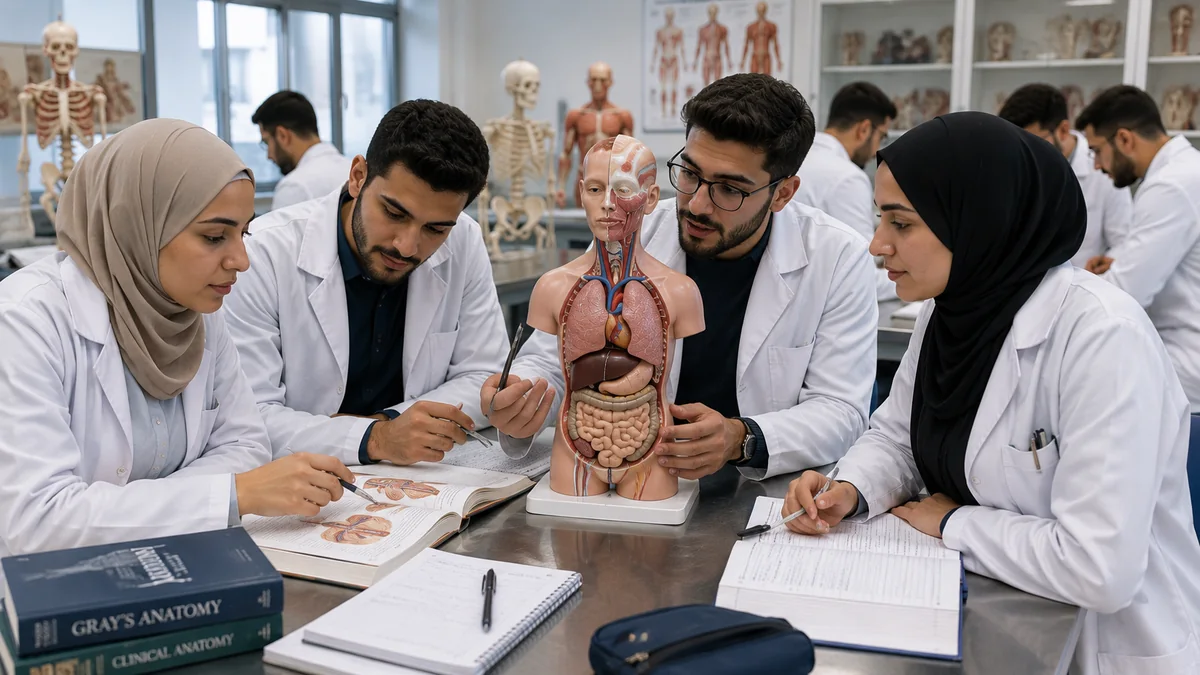
Admission to Medicine in English is based primarily on secondary education and science preparation. Biology and Chemistry are central to the admission process at the major medical universities, while English assessment varies by institution. Some universities use an English component in the entrance process, and the number and format of exam sessions also vary.
Applicants normally prepare a secondary school diploma, transcript or grade record, passport, medical documentation and the required legalised or translated documents. The exact legalisation route depends on the country where the documents were issued, so a Saudi, Emirati, Jordanian or Egyptian application file should not be prepared from a generic checklist without checking the document origin.
Choosing the university first also makes the document process easier. A candidate applying to Plovdiv Medical University, for example, should work from the current Plovdiv admission route, while an applicant targeting Pleven Medical University must account for its different intake calendar.
Visa D and Residence After Admission
Most applicants arriving from non-EU Arab countries need a Bulgarian long-stay Visa D before beginning long-term study. The application is submitted through a Bulgarian diplomatic or consular mission, and the file can involve admission documents, passport requirements, insurance, proof of accommodation, financial evidence and other supporting documents depending on the legal basis and consular post.
The Bulgaria student Visa D requirements should be treated as part of the admission timeline rather than something to start after every other step is complete. Document legalisation and consular preparation can take time, especially when the applicant must coordinate documents from more than one country.
After arrival, non-EU students also need to complete the applicable residence formalities in Bulgaria. Admission, Visa D and residence are separate stages, so the application plan should leave enough time for all three.
Practical Student Life for Arab Students
Daily-life questions matter, but they should not replace the academic and licensing decision. In Sofia and Plovdiv, students can find halal food options and active mosques. Sofia’s Banya Bashi Mosque is a functioning mosque in the city centre, while Plovdiv’s Dzhumaya Mosque is also active. Halal certification can vary between restaurants and shops, so students who follow specific dietary requirements should verify the individual provider rather than assume that every Middle Eastern restaurant or meat product is certified.
University campuses should also not be assumed to provide dedicated prayer rooms or halal canteens unless the institution confirms it. For most students, housing location, transport to lectures and hospitals, monthly rent, winter weather and access to everyday services have a larger effect on the routine of a six-year degree.
Housing costs are particularly important in the capital, where living in Sofia as an international student can require a larger accommodation budget than smaller Bulgarian university cities.
How to Choose With Your Future Licence in Mind
Before paying a deposit or committing to one city, an Arab applicant should be able to answer five questions:
- Which country do I currently expect to practise in after graduation?
- Which regulator will assess my medical qualification there?
- What internship, experience and professional registration evidence does that regulator currently require?
- Which Bulgarian universities fit my grades, admission timetable and budget?
- Can I preserve complete academic and clinical documentation throughout the six-year programme?
No adviser can promise what a regulator will decide six years in advance. The useful role of an admissions service is to reduce avoidable risk now: compare universities, prepare the correct application file, plan the visa process and identify licensing issues that should be checked before enrolment rather than after graduation.
Frequently Asked Questions
Is a Bulgarian medical degree recognised in Saudi Arabia?
A Bulgarian medical qualification can be submitted to the Saudi Commission for Health Specialties, but there is no automatic licence. SCFHS applies professional classification, qualification verification and registration requirements, and Saudi nationals with foreign qualifications may also need Ministry of Education equivalency.
Can I work in the UAE immediately after graduating in Bulgaria?
Not necessarily. UAE licensing depends on the professional title and the Unified Professional Qualification Requirements. Current rules can include internship, professional licence and post-internship experience requirements for graduates from universities outside the UAE.
Is the Bulgarian degree actually called MBBS?
No. “MBBS in Bulgaria” is a common search term. The formal Bulgarian qualification is Medicine at master’s level with the professional qualification of physician.
How much is Medicine in Bulgaria for 2026/27?
Current first-year Medicine in English fees at major universities are around €9,000-€10,000. Medical University Sofia lists €9,950, Plovdiv and Varna list €10,000 for newly admitted first-year students, and Pleven lists €9,000.
Does WDOMS listing guarantee a GCC medical licence?
No. A directory listing does not replace the licensing rules of SCFHS, DHA, DOH, MOHAP, Qatar DHP or another national regulator. Education, internship, verification, experience and professional registration requirements can all affect eligibility.
Can Arab students find halal food in Bulgaria?
Halal food options are available in larger student cities such as Sofia and Plovdiv, but certification varies by provider. Students with specific dietary requirements should verify individual restaurants, butchers and products directly.
Do Arab students need a Visa D for Bulgaria?
Students who are citizens of non-EU countries generally need the appropriate Bulgarian long-stay immigration route for full-time study, normally including Visa D before residence formalities in Bulgaria. The exact consular documents depend on nationality and the applicant’s circumstances.
Which Bulgarian medical university is best for students returning to the Gulf?
There is no universal answer. University choice should combine admission chances, tuition, city and programme structure with the licensing requirements of the country where the student plans to practise after graduation.
iGeneration can review your school results, target country, university options, admission documents and Visa D timeline before you apply.