

Choosing where to study dentistry is a major decision that shapes both your professional future and daily student experience. Over the last decade, Bulgaria has become an increasingly popular destination for international students looking for EU-recognized dental education, English-language programs, and more accessible admission pathways.
But one key question remains: is dentistry education in Bulgaria actually good?
Quick answer: Is dentistry in Bulgaria good?
Dentistry education in Bulgaria is a European Union-accredited medical training system combining theoretical education, laboratory practice, and supervised clinical experience. It is widely chosen by international students seeking recognized dental degrees, English-language programs, and pathways to professional practice in Europe and beyond.
Why more students choose Bulgaria for dentistry
Studying dentistry in Western Europe or North America can be extremely competitive and expensive. Bulgaria offers an alternative that maintains recognized educational standards while reducing financial barriers.
Key reasons students consider Bulgaria include:
-
EU-recognized degrees aligned with European qualification frameworks
-
Lower tuition fees compared to Western Europe
-
English-language dental programs
-
Strong clinical training integrated into the curriculum
-
International student communities
In many cases, students who are unable to secure placements at highly competitive Western universities use Bulgaria as a practical and legitimate pathway into dental medicine.
Structure of dentistry programs in Bulgaria
Dental programs in Bulgaria are typically called “Dental Medicine” and are offered through accredited medical universities. Most programs last five to six years and follow a structured progression similar to other European medical degrees.
The curriculum usually includes:
-
Basic medical sciences (anatomy, physiology, pathology)
-
Dental-specific theory and laboratory work
-
Simulation-based practice
-
Clinical training with real patients
-
Final examinations and thesis components
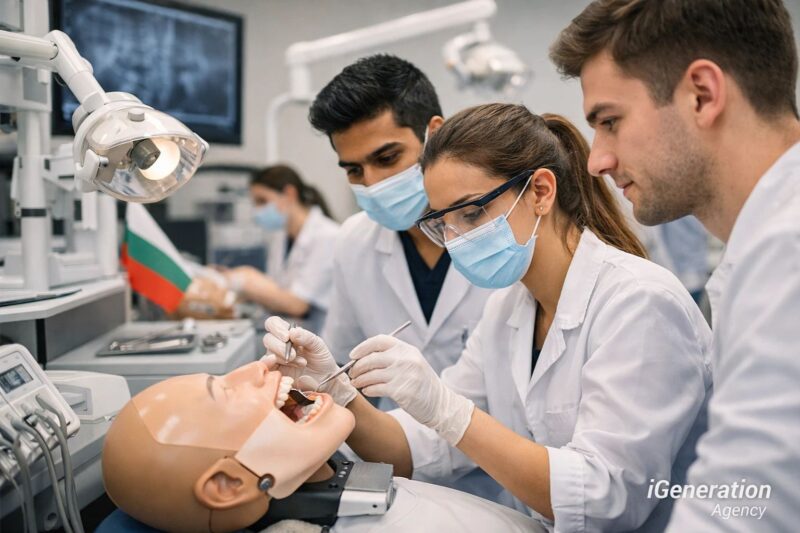
One of the biggest strengths of Bulgarian dental education is the integration of clinical exposure during later study years. Students gradually move from theoretical learning into supervised patient treatment, helping build practical confidence before graduation.
Quality of dental universities in Bulgaria
Bulgarian dental universities operate within the European Higher Education Area, meaning academic standards follow EU educational directives. These measures guarantee that degrees meet the minimum quality standards recognized throughout Europe.
Many programs are taught fully in English, especially those designed for international students.
However, quality can vary between universities. Factors that often influence student experience include:
-
Access to modern clinical facilities
-
Student-to-patient ratios
-
Teaching style and faculty involvement
-
Availability of specialization pathways
It is often advisable to prioritize clinical opportunities over cost when selecting a university.
Choosing the Right Dentistry University in Bulgaria Can Be Challenging
While dentistry education in Bulgaria offers strong academic standards and internationally recognized degrees, many students struggle with one critical question: which university is the right fit for their goals and future career plans?
Admission requirements, clinical training quality, specialization options, and long-term licensing considerations can vary between institutions. Without clear guidance, it is easy to focus only on tuition fees or rankings instead of factors that truly impact your professional development.
At iGeneration Agency, we help future dental students navigate the entire process – from choosing the right university and understanding admission criteria to preparing a strong application strategy tailored to individual goals.
If you want expert support and a clear path forward, you can take the next step here – Apply Now.
Clinical training: What students can expect
Clinical training is one of the most important components of dental education. In Bulgaria, students typically begin patient interaction after completing foundational science courses.
Clinical education usually includes:
-
Diagnostics and treatment planning
-
Restorative dentistry procedures
-
Preventive dental care
-
Oral surgery basics
-
Prosthetics and orthodontic exposure
Students work under supervision within university clinics, gaining real-world experience that helps bridge the gap between theory and practice.
In most programs, practical skill development becomes the primary focus during the final years.
International recognition and career opportunities
A major advantage of studying dentistry in Bulgaria is that degrees are aligned with EU directives for medical professions. This provides opportunities for graduates to pursue licensing within other European countries.
However, recognition does not automatically mean immediate practice everywhere.
Graduates may still need:
-
National licensing exams
-
Language certification
-
Additional adaptation periods depending on the country
Students planning careers abroad should initiate the licensing research process well in advance.
Bulgaria vs other European study destinations
When comparing Bulgaria with other countries, several differences stand out.
Compared to Western Europe:
-
Lower tuition fees
-
More accessible admission requirements
-
Similar EU accreditation
Compared to other Eastern European options like Poland or Romania:
-
Competitive pricing
-
Growing reputation among international students
-
Smaller but expanding academic visibility globally
Ultimately, the best choice depends on budget, academic goals, and long-term career plans.
Who should consider studying dentistry in Bulgaria
Dentistry programs in Bulgaria are particularly suitable for:
-
International students seeking EU-recognized medical education
-
Applicants needing English-language programs
-
Students looking for a balance between cost and educational quality
-
Those planning careers within Europe
It may be less suitable for students seeking highly research-focused universities or those expecting extremely selective academic environments similar to elite Western institutions.
Common mistakes future dental students make
Many applicants focus only on tuition fees without evaluating other critical factors. Common mistakes include:
-
Choosing a university based solely on price
-
Not researching clinical training facilities
-
Ignoring licensing requirements for future work abroad
-
Underestimating the academic intensity of medical education
Dentistry programs require strong commitment and consistent study effort regardless of location.
FAQ
Are Bulgarian dentistry degrees recognized internationally?
They are recognized within the EU and often globally, though licensing requirements vary by country.
Are dentistry programs taught in English?
Yes, many Bulgarian universities offer full English-language dental programs for international students.
Is studying dentistry in Bulgaria difficult?
Yes. The curriculum follows medical education standards and includes demanding theoretical and clinical training.
Can graduates work abroad after finishing?
Many graduates pursue international careers, but local licensing requirements must be met.
Final thoughts
Dentistry education in Bulgaria offers a realistic pathway into European medical training, combining structured academic programs with practical clinical experience. For many international students, it provides an accessible alternative to more competitive or expensive destinations while maintaining recognized educational standards.
The key to success is choosing the right university, understanding long-term career requirements, and approaching the decision as a professional investment rather than simply a lower-cost option.
Choosing the right university and application strategy can make a significant difference. If you want personalized guidance tailored to your goals, you can take the next step here – Apply Now.