



Physiotherapist salaries vary more by country, employer and career level than by the university where the degree was completed. A graduate who enters a public health system usually starts on a defined pay scale, while private clinics and self-employment use different models based on hours, caseload, location and business costs.
In England, the 2026/27 NHS Band 5 scale runs from £32,073 to £39,043. In Ireland, the June 2026 HSE Staff Grade Physiotherapist scale runs from €45,514 to €65,068, including the long-service increment. Those figures are gross annual salaries before tax, pension deductions and personal expenses.
What the published figures show: the UK and Ireland offer transparent public-sector pay scales with defined progression points. Germany publishes a national monthly earnings median for physiotherapists, while Italy combines public collective agreements, private employment and self-employment, so one national salary figure would be misleading.
For students considering Physiotherapy studies in Bulgaria, future salary should be compared together with qualification recognition, living costs, language requirements and the time needed to enter the profession.
Physiotherapist Salary Comparison for 2026
| Country and system | Published gross pay | What the figure represents |
|---|---|---|
| England – NHS Band 5 | £32,073 to £39,043 per year | Typical entry band for newly qualified NHS physiotherapists |
| England – NHS Band 6 | £39,959 to £48,117 per year | Specialist or more experienced clinical roles |
| England – NHS Band 7 | £49,387 to £56,515 per year | Advanced, highly specialist or clinical leadership roles |
| Ireland – HSE Staff Grade | €45,514 to €65,068 per year | June 2026 incremental scale, including the long-service point |
| Ireland – HSE Senior Physiotherapist | €65,197 to €76,767 per year | Senior clinical grade with nine published points |
| Ireland – HSE Clinical Specialist | €72,119 to €83,689 per year | Advanced specialist grade with nine published points |
| Germany – national median | €3,452 gross per month | Median full-time monthly earnings, not a graduate starting salary |
| Italy | No single national physiotherapist salary | Pay depends on public contract classification, employer, hours, allowances and self-employment |
These amounts should not be compared as if they were equivalent take-home income. Tax, pension contributions, housing costs, working hours, transport and local prices can change the practical value of the same gross salary.
United Kingdom: NHS Physiotherapist Pay
Most newly qualified physiotherapists entering the NHS in England begin at Band 5. The 2026/27 Agenda for Change scale is effective from 1 April 2026 and provides three salary points:
- Entry point: £32,073
- Intermediate point: £34,592
- Top point: £39,043
Progression is not an automatic annual increase at every point. NHS pay progression follows the timing and conditions attached to each band, including the required period at a pay point and satisfactory performance.
Band 6 and Band 7 progression
Band 6 roles often involve a developed speciality, greater clinical independence, supervision responsibilities or management of a more complex caseload. The current England scale runs from £39,959 to £48,117.
Band 7 positions can include highly specialist physiotherapy, advanced clinical work, team leadership and service-development responsibilities. The current scale runs from £49,387 to £56,515.
The job title alone does not determine the band. Employers assess the responsibilities and required competence of the position. A postgraduate degree can support progression, but it does not guarantee a Band 6 or Band 7 appointment without the experience and evidence required for the role.
London weighting and the rest of the UK
NHS salaries differ across England, Scotland, Wales and Northern Ireland. London posts can also receive High Cost Area Supplements. A salary quoted for England outside London should therefore not be assumed to apply throughout the UK.
Internationally educated graduates must be registered before working as physiotherapists. A Bulgarian qualification can be assessed through the HCPC international route, but registration is separate from the job application and immigration process.
Ireland: HSE Physiotherapist Pay
Ireland uses national consolidated salary scales for HSE grades. The scales include a sequence of incremental points rather than one fixed salary for every physiotherapist.
From 1 June 2026, the Staff Grade Physiotherapist scale begins at €45,514 and reaches €63,831 before the long-service increment of €65,068. A new employee without recognised public-service experience would normally begin at the first point, while recognised relevant service can affect placement under the applicable rules.
The Senior Physiotherapist scale runs from €65,197 to €76,767. The Clinical Specialist Physiotherapist scale runs from €72,119 to €83,689.
Salary progression does not remove the professional-registration requirement. A graduate with a Bulgarian degree must complete HCPC or CORU physiotherapy qualification recognition before entering a regulated physiotherapist role in the UK or Ireland.
International recruitment support
HSE information for overseas candidates states that eligible recruits can receive support for relocation expenses. The published maximum is currently €4,160 for candidates based in the EU or UK and €4,710 for candidates based outside the EU. The package is linked to qualifying employment and requires receipts.
Relocation support can reduce initial moving costs, but it should not be treated as recurring salary. Registration fees, housing deposits and the cost of moving can still affect the first months of employment.
Germany: A National Earnings Median
Germany’s Federal Employment Agency publishes a median gross monthly salary of €3,452 for physiotherapists in the relevant specialist occupational category. Annualised over twelve months, that is approximately €41,424 gross.
The figure is a national median for full-time employees, not a guaranteed graduate salary. Regional differences, collective agreements, experience, employer type and additional qualifications can move an individual offer above or below the median.
A candidate also needs professional recognition and sufficient German for clinical practice. A salary comparison that ignores the time and cost required to reach the necessary language level can give an unrealistic picture of the route.
Italy: Why One Salary Figure Is Misleading
Italian physiotherapists work in public healthcare, private hospitals, rehabilitation centres, care facilities, sports organisations, private clinics and self-employment. Each setting uses a different compensation structure.
Public employment is governed by the applicable collective agreement, classification, seniority and allowances. Private employment depends on the employer and contract. A self-employed physiotherapist receives professional revenue rather than a salary and must cover taxes, pension contributions, insurance, premises, equipment, administration and periods without paid work.
Session prices are therefore not directly comparable with annual employee salaries. A private practitioner charging a higher hourly fee may still have lower predictable income after unpaid administration, cancellations and operating costs.
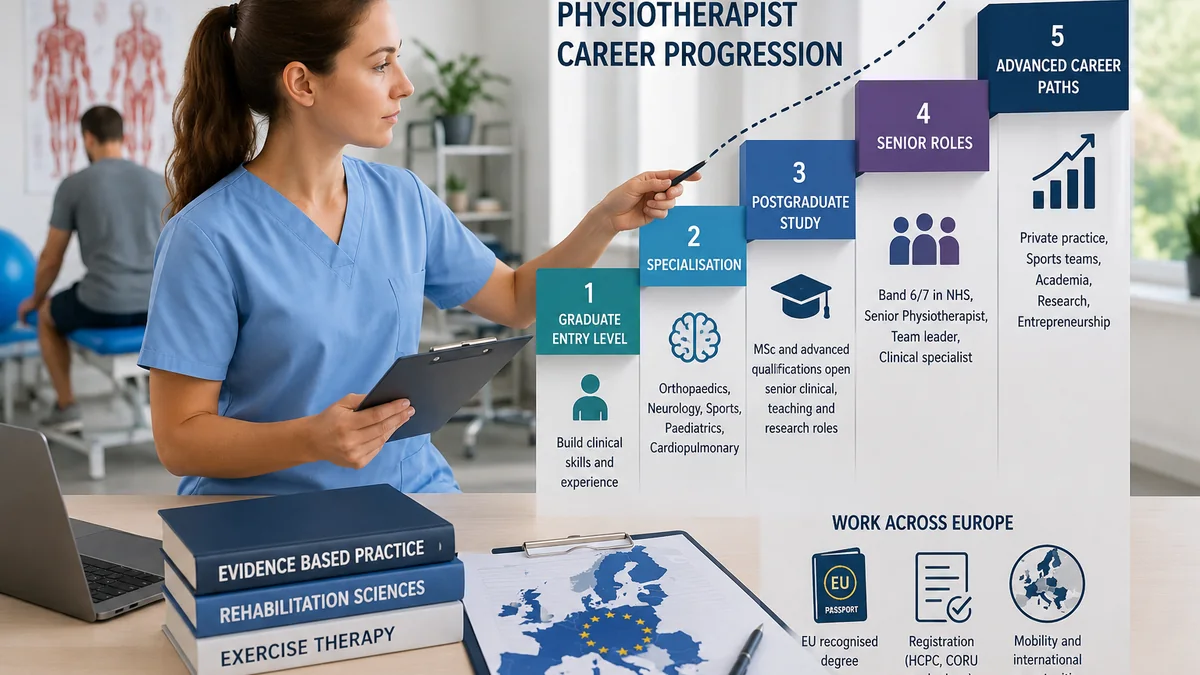
Where Career Progression Comes From
Higher earnings normally follow a change in responsibility rather than the simple passage of time. Common routes include:
- Developing expertise in musculoskeletal, neurological, respiratory, paediatric or rehabilitation practice
- Moving from general clinical work into senior or specialist posts
- Taking responsibility for supervision, service development or team leadership
- Completing postgraduate education relevant to the intended role
- Building a private caseload after gaining clinical experience
- Moving between countries after completing professional recognition and language requirements
Sports physiotherapy
Sports physiotherapy is attractive to many students, but it is competitive and does not automatically pay more than public healthcare. Income depends on the employer, level of competition, contract stability and whether the work is combined with a clinic role.
The Physiotherapy programme at the National Sports Academy is taught within a university focused on sport, movement and rehabilitation. That environment can support relevant experience, but graduates still need professional registration, clinical competence and a competitive employment profile.
Private practice
Private practice can create a higher income ceiling, but revenue is not the same as personal earnings. A clinic owner pays for facilities, software, insurance, marketing, professional services, equipment and staff where applicable.
Many physiotherapists first develop experience in hospitals, community care or established clinics. That period builds clinical judgement, referral relationships and confidence before taking on the commercial responsibilities of self-employment.
Compare the Degree With the Career Route
A study decision should account for admission, tuition, clinical education, recognition requirements and the country where you plan to work.
Salary Is Only One Part of Financial Return
Gross salary is the most visible figure, but it does not show how quickly a graduate reaches a stable financial position. A useful comparison includes:
- Annual tuition and compulsory university fees
- Living costs during the degree
- Whether study is financed through savings, family support or debt
- The duration of the programme
- Any delay before admission
- Registration, examination and language costs after graduation
- The time between graduation and the first professional job
- Net salary after tax, pension and housing costs
For eligible fee-paying foreign candidates, admission to Physiotherapy without a separate entrance exam can remove one potential delay before the degree begins. It does not remove the academic, documentation or professional-registration requirements attached to the full route.
The lowest tuition option is not automatically the best financial choice, and the highest salary country does not automatically produce the highest disposable income. The useful measure is the complete path from application to registered employment.
How to Compare a Physiotherapy Job Offer
Before accepting a position in another country, compare more than the headline salary:
| Question | Why it matters |
|---|---|
| Is the amount annual, monthly or hourly? | Prevents incorrect comparisons between job adverts |
| Is it gross or net? | Tax and pension deductions can materially change take-home pay |
| Which pay point applies at entry? | The top of a scale is not normally a new graduate’s starting salary |
| Are previous years of experience recognised? | Relevant service can affect placement on an incremental scale |
| How many contracted hours are included? | A higher annual salary may reflect longer working hours |
| Are weekends, overtime or on-call duties paid separately? | Enhancements can change total compensation |
| What are the housing and commuting costs? | Location can outweigh a difference in gross salary |
| Is professional registration already complete? | Employment cannot begin in a regulated role without registration |
Frequently Asked Questions
How much does a newly qualified physiotherapist earn in England?
A newly qualified NHS physiotherapist commonly enters Band 5. The 2026/27 England scale runs from £32,073 to £39,043, with entry normally at the first applicable point.
How much does an HSE Staff Grade Physiotherapist earn in Ireland?
The June 2026 scale starts at €45,514 and reaches €65,068 including the long-service increment. New employees do not automatically begin at the top of the scale.
Does studying abroad reduce my salary?
Public pay scales are linked to the job grade and recognised experience, not to whether the degree was completed locally. The graduate must first obtain the required professional recognition and registration.
Is Ireland better paid than the UK?
The published HSE figures are higher in nominal currency than the England NHS Band 5 scale, but tax, housing, exchange rates, pension deductions and the entry point must be considered before comparing disposable income.
What is the highest-paying physiotherapy speciality?
There is no universal highest-paying speciality. Advanced public-sector grades, clinical leadership, specialist private work and successful practice ownership can all increase earnings, but each requires different experience and carries different risks.
Can a Bulgarian physiotherapy graduate work across Europe?
A Bulgarian qualification can be submitted for recognition in other European countries. Each destination applies its own professional-registration, language and documentation requirements.
Official Sources
- NHS Employers – Pay scales for 2026/27
- HSE – Current consolidated salary scales
- HSE – Support for overseas candidates
- German Federal Employment Agency – Physiotherapist earnings median
- ARAN – Italian public healthcare collective agreement
Plan From Admission to Employment
iGeneration can review your eligibility and explain how the Bulgarian degree, clinical training and recognition route fit your intended career country.